CommunityWD 436 · pp. 4–31
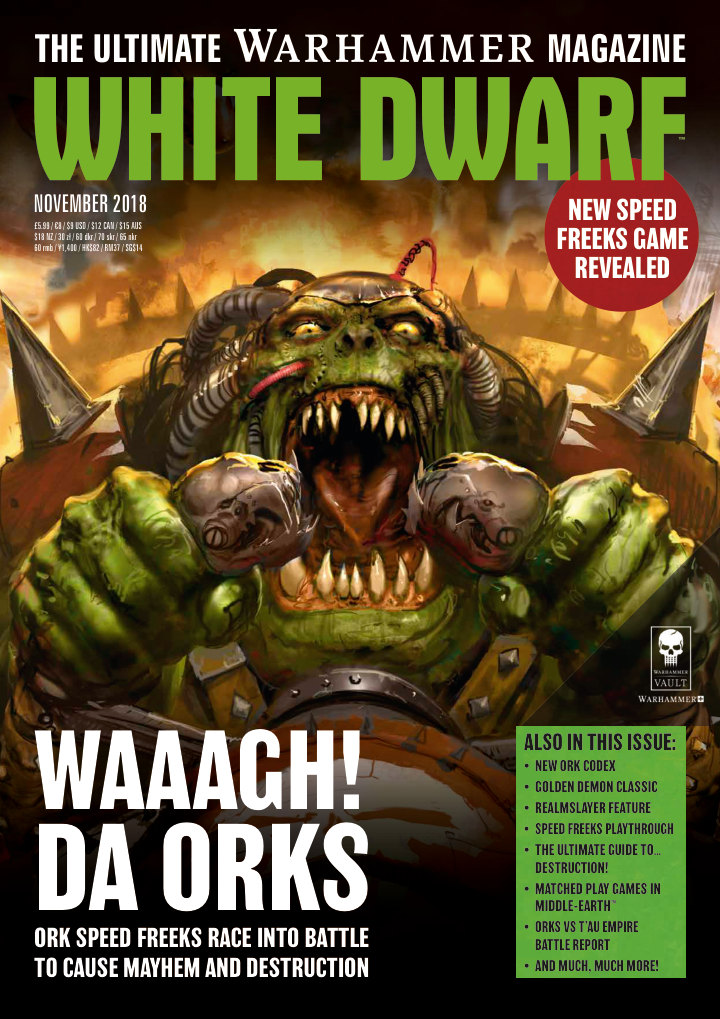
Orks take over the month’s releases with a new codex, six racing vehicles and the Speed Freeks game. Kill Team Commanders, Space Marine Heroes and fresh hobby equipment accompany the greenskins, while Forge World, digital games and Black Library broaden the issue’s news.
Warhammer 40,000Kill Team
InterviewWD 436 · p. 10
James Gallagher explains a simple vehicle game with difficult choices about allocating dice between initiative, movement and shooting. Different rukks and campaign formats support repeat play, while optional clan abilities and Kustom Jobz give racing mobs character without changing the core rhythm.
Speed FreeksOrks
InterviewWD 436 · p. 17
Simon Grant introduces important characters whose missions and abilities raise the stakes of a skirmish. Commander levels, traits and stronger specialisms offer several ways to spend a larger points allowance, with familiar aura effects represented through tactics rather than automatic army-wide benefits.
Kill Team
InterviewWD 436 · p. 21
Ed Cottrell builds a Tactical Squad whose members express both brotherhood and individuality. Poses, equipment, armour variations and alternative bare heads suggest different duties and temperaments, while sculpted ruined bases give the figures a common place in the same ongoing battle.
Warhammer 40,000Space Marines
CommunityWD 436 · pp. 28–29
A mobile real-time game asks players to assemble a force around a chosen general and commit units, heroes and spells as the battle unfolds. Automatic movement and targeting shift attention toward timing and army composition, with fantastical battlefields and experience progression supporting repeated games.
Age of Sigmar: Realm Wars
CommunityWD 436 · pp. 32–33
Ghazghkull replaces the usual advice-giving dwarf for an especially Orky letters page. Questions about galactic ambition sit beside reader miniatures and practical painting explanations, keeping the issue’s greenskin takeover connected to the normal exchange of hobby experiences.
Warhammer 40,000Age of Sigmar2 paint colours
CommunityWD 436 · pp. 34–35
The portal returns to a magazine dominated by enormous Ork engines and Apocalypse battles. Stompa variants, the linked Assault on Fort Wrath and contemporary Middle-earth developments recall an era of ambitious multi-table stories, providing a precedent for this issue’s enthusiasm for mechanised greenskins.
Warhammer 40,000Middle-earth Strategy Battle Game
CommunityWD 436 · pp. 36–37
The guide introduces gangs, campaign development and the choice of battlefields available beneath the hive. Different House identities and small groups of individual fighters offer a manageable collecting project, with progression giving players reasons to care about their gangers beyond a single skirmish.
Necromunda
LoreWD 436 · pp. 40–43
Gotrek’s nearly thirty-year publishing history runs from early short stories through several authors and the destruction of the old world. Reflections from William King, Nathan Long and later writers lead to Realmslayer, where the doom-seeking dwarf emerges into a changed reality with a new voice and unfinished business.
Warhammer Fantasy BattlesAge of SigmarDwarfs
InterviewWD 436 · pp. 44–51
Matt Holland explains six vehicles built around rival drivers and different attitudes toward speed, technology and danger. The ’Eavy Metal team then uses clan colours and contrasting textures to distinguish the machines, from a worn Snakebite squig wagon to a proudly polished Bad Moon racer.
Warhammer 40,000Orks8 paint colours
PaintingWD 436 · p. 46
A dangerously obscured driving position, exposed fuel and an unfortunate strapped-on Grot reveal a reckless crew. Rich blue and white armour contrast with warm rust and green flesh, using the Deathskulls scheme to make the vehicle’s visual disorder feel deliberate.
Warhammer 40,000Orks
PaintingWD 436 · p. 47
An enormous Speedboss rides a jet-powered chariot whose rear wheels keep its acceleration barely under control. Black plates, blue-grey rubber and khaki leather separate the model’s materials, with red intakes supplying a small speed-obsessed accent rather than overwhelming the Goff identity.
Warhammer 40,000Orks
PaintingWD 436 · p. 48
The low-technology buggy transports several kinds of weaponised squig and looks ready to tear apart a rival’s tyres. Scratches and rust make it convincingly neglected, while natural brown and yellow panels connect the machine with the Snakebites’ more traditional beasts.
Warhammer 40,000Orks
PaintingWD 436 · p. 49
A grounded pilot converts aircraft wreckage into a racing weapon without abandoning its martial identity. Polished silver, darker oily tracks, military greens and red markings establish a deliberately varied finish, suggesting that its owner has copied details from Imperial vehicles.
Warhammer 40,000Orks1 paint colour
PaintingWD 436 · p. 50
Advanced guns and a localised tellyporta allow this racer to cheat through the warp. Bright yellow armour develops from a warm base through pale highlights and saturating glazes, with minimal damage preserving the impression that its wealthy crew takes pride in the machine.
Warhammer 40,000Orks3 paint colours
PaintingWD 436 · p. 51
Welded engines, igniting exhausts and an immense rivet gun make the buggy a fitting speed addict’s weapon. Red armour gains warm highlights and dark recesses, while cooler silver machinery provides contrast and keeps the densely packed engine readable.
Warhammer 40,000Orks4 paint colours
Battle reportWD 436 · pp. 52–59
Four studio racers learn the game under James Gallagher’s guidance, trading rams, fires and increasingly desperate manoeuvres. Losing bikes frees dice for surviving wagons, allowing Matt’s Snakebite Squigbuggy to exploit concentrated shooting and win the destructive contest with seven points.
Speed FreeksOrks
PaintingWD 436 · pp. 60–61
A messenger encounters a disturbing roadside scene in a carefully staged diorama inspired by a real location. Composition keeps the important faces visible and prevents figures blocking one another, allowing the viewer to share the central character’s uncertainty about the apparent dead.
Warhammer Fantasy BattlesThe Empire
PaintingWD 436 · p. 62
An odd-numbered group creates a dynamic triangle around a touchdown scorer and supporting runners. An injured Orc both establishes the cost of the play and elevates the rear figure, making its presence serve the story and the physical composition at once.
Blood BowlHumans
PaintingWD 436 · p. 63
A large cave scene develops from an idea sketched to work from several viewpoints. Familiar but varied natural colours distinguish its different troggoths, while the setting makes an ambitious collection of monsters feel like inhabitants of one threatening place.
Age of SigmarTroggoths
PaintingWD 436 · p. 64
The Master of Lake-town becomes the focus of a quiet scene before Smaug’s arrival. Subdued supporting figures preserve his importance, with purple robes and turquoise architecture forming a sympathetic palette around an intentionally unheroic central character.
Middle-earth Strategy Battle GameLake-town
PaintingWD 436 · p. 65
Bain offers a small-scale subject rich in fine clothing details for a painter who travelled from China to compete. Carefully controlled colours and miniature textures make the young heir a characterful alternative to the larger warriors commonly selected for display.
Middle-earth Strategy Battle GameSurvivors of Lake-town1 paint colour
PaintingWD 436 · p. 65
Fine horizontal marks and restrained highlights give black robes visible woven texture without stripping away their darkness. A simple base concentrates attention on the Ringwraith, illustrating how a small subject and a restricted palette can reward exacting surface work.
Middle-earth Strategy Battle GameMordor1 paint colour
Battle reportWD 436 · pp. 70–85
Dan Harden’s mechanised Bad Moons must obtain upgrades from a Mekboy Workshop before racing onward, while Martyn Lyon’s Vior’la force blocks their path. Concealed target vehicles and aggressive buggies briefly preserve hope, but concentrated T’au fire destroys the crucial Squigbuggy and prevents the Speedwaaagh’s escape.
Warhammer 40,000Orks
LoreWD 436 · pp. 88–95
Orruks, grots, troggoths, ogors and Gargants embody different expressions of Gorkamorka’s appetite for destruction. Tribal traditions, rival leaders and the magic generated by massed greenskins explain how these unruly forces gather, with in-world accounts adding a fearful outsider’s view of their monsters.
Age of SigmarIronjawz
InterviewWD 436 · pp. 96–99
Seb Perbet explains why a face and its expression must match a miniature’s pose, clothing and implied character. His Gaunt Summoner nomination turns a towering headpiece, many eyes and open mouth into evidence of alien intellect and aggressive sorcery, proving that a head can carry a whole model’s story.
Warhammer 40,000Age of SigmarDisciples of Tzeentch
TacticsWD 436 · pp. 100–103
Jay Clare explains army bonuses, heroic tiers, leader selection and the returning Alliance Matrix. Example Minas Tirith and Mordor forces show how to combine needed actions and battlefield roles, while the costs of ahistorical alliances encourage players to weigh narrative identity against tempting individual models.
Middle-earth Strategy Battle GameMinas Tirith
ShowcaseWD 436 · pp. 104–111
Terry Pike’s tournament-minded Chaos collection combines daemons, Tzaangors and Skaven for complementary battlefield jobs. Conversion work, magnetised greater-daemon weapons and worm-covered bases preserve a shared identity, while airbrushed blends and traditional brush techniques support a varied army that keeps expanding.
Age of SigmarMaggotkin of Nurgle1 paint colour
ModellingWD 436 · pp. 112–113
A plague-tainted research facility brings several warbands together for a narrative game. Jonathan Hartman’s orange-and-white terrain travels in a steamer trunk, while Jeremy Lueth’s scenario and inhabitants turn the industrial rooms into a shared horror setting that rewards interaction between the players.
Warhammer 40,000
ModellingWD 436 · p. 113
John Blanche creates filth-encrusted adversaries from large industrial bodies and unsettling mechanical alterations. Replaced heads and writhing equipment blur the boundary between mutant and machine, fitting creatures that shamble through the research station’s corridors as a threat to every visiting warband.
Warhammer 40,000
ModellingWD 436 · p. 114
Retired soldiers, a convict and other pulp-horror archetypes form a band trying to survive the station. Quick block colours, washes and drybrushing favour expression over neatness, allowing their disparate origins to remain visible within the same grimy environment.
Warhammer 40,000
ModellingWD 436 · p. 115
Neave Blacktalon becomes an Inquisitor through Hector Rex’s equipment and subtle technological additions. White armour covered in scratches records her encounters with the station’s zombies, while a psychic hood, rebreather and carefully improvised pistol establish her place in the far future.
Warhammer 40,000Inquisition
ModellingWD 436 · p. 115
A secretive hired-gun band hides behind bird skulls while searching for a data-servitor. Its heavily constructed leader and converted archers, flagellants and cultists create a coherent group whose mission and possibly heretical identity matter as much as their weapons.
Warhammer 40,000
ModellingWD 436 · p. 115
A simple Greyfax conversion leads Solar Auxilia guards into the purging of Lesotho 212. A dark scheme contrasts deliberately with Hestora Agarl’s white armour, letting allied Inquisitors remain distinct while the account connects their actions through a decade-long pursuit.
Warhammer 40,000Inquisition
ModellingWD 436 · p. 116
A declining Navigator House returns to a facility still bearing the colours of its former owners. Converted agents blend cultist and Mechanicus parts into unusual retainers, with additional models extending the history of a family whose faded wealth shapes the encounter.
Warhammer 40,000Navis Nobilite
ModellingWD 436 · pp. 118–123
The Warhammer World team designs a triangular coastal display showing Idoneth attacking an unprepared Bonesplitter settlement. Seafront references, emerging figures and shaped clear-plastic splashes sell the tide-borne assault, while carefully limited defenders and hidden supports preserve clear views of the raiders.
Age of SigmarIdoneth Deepkin1 paint colour
PaintingWD 436 · pp. 124–125
The reference explains brush choices, undercoats and the sequence of techniques used in the Ork recipes. Definitions of washing, glazing and drybrushing prepare readers to follow the staged guides, with the approach encouraging a practical finish before optional refinements.
3 paint colours
PaintingWD 436 · pp. 126–127
White undercoats and airbrushed yellow create a strong foundation for the Bad Moons’ bright armour. Skin, horns, leather and metal receive separate recipes, while freehand black flames and repeated colours connect small infantry with huge racers across the studio collection.
Warhammer 40,000Orks33 paint colours
PaintingWD 436 · p. 128
Grey edge highlights and chipped silver keep black armour readable without making it look blue. A lighter green skin mixture distinguishes these warriors from the main army, demonstrating how a few shared clan colours can accommodate varied flesh tones.
Warhammer 40,000Orks25 paint colours
PaintingWD 436 · p. 128
Mismatched brown, yellow and blue panels give a biker a rustic, repaired appearance. Its natural palette takes cues from the Squigbuggy, preserving the clan’s traditional identity even when its warriors ride loudly mechanised vehicles.
Warhammer 40,000Orks25 paint colours
PaintingWD 436 · p. 128
Green armour, chrome details and patterned trousers give the biker a recognisably military appearance. A metallic spray simplifies the machine, while a sepia tint on its suspension suggests oil and restrained pale highlights keep the camouflage readable.
Warhammer 40,000Orks25 paint colours
PaintingWD 436 · p. 129
Bike and rider are painted separately with metallic and green undercoats suited to their dominant materials. Red armour is added after the engine, reducing repeated work on the machinery, while several different metal finishes make the bike feel assembled from mixed parts.
Warhammer 40,000Orks26 paint colours
PaintingWD 436 · p. 129
Blue and white armour gain personality through controlled chips and a simple freehand check pattern. Brown damage marks suggest rust beneath the paint, with a watered-down grid making corrections easier before alternate squares are filled.
Warhammer 40,000Orks26 paint colours
PaintingWD 436 · p. 129
Separate armour panels receive a yellow spray while the rest of the bike begins in metal. The rider shares that warm foundation, which also serves as an effective starting point for green skin, demonstrating another route to the clan’s familiar bright colour scheme.
Warhammer 40,000Orks26 paint colours
ModellingWD 436 · p. 130
An extensively personalised walker combines armoured scraps, altered hydraulics and added rivets. Components from bikes, Killa Kans and aircraft reinforce the impression of a Mek’s individual construction, with tiny sculpted bolts helping the additions belong to the original machine.
Warhammer 40,000Orks
ModellingWD 436 · p. 131
Spare wheels from an earlier project allow a longer customised transport. Exposed machinery, altered crew and reused components establish an improvised working vehicle, while removable crew make it possible to paint the crowded interior without losing access to its figures.
Warhammer 40,000Orks
ModellingWD 436 · p. 132
Two unfinished constructions demonstrate the appeal of following an Ork conversion wherever the available components lead. A flame tank and an extraordinary sail-driven vehicle prioritise convincing improvisation, showing the construction ideas before paint hides the different source materials.
Warhammer 40,000Orks
ModellingWD 436 · p. 133
A Leman Russ receives a Battlewagon turret, Ork guns and glyph plates to become a convincingly stolen vehicle. Reusing an existing sponson mount simplifies the conversion, while the accompanying discussion points toward the returning Looted Wagon options in Chapter Approved.
Warhammer 40,000Orks
ShowcaseWD 436 · pp. 136–137
A compact gallery brings together reader-painted greenskins, spectral fighters and heavily armoured science-fiction subjects. The varied finishes show how shared miniatures acquire personal identities through palette and presentation, supported by practical guidance on photographing the results.
Warhammer 40,000Age of Sigmar
ShowcaseWD 436 · p. 137
Scott Ferguson chooses green armour to complement copper trim and a red sandy base on his Onager. A muted cream secondary colour balances the arrangement, with the appeal of the Icarus array giving the project a clear starting point before the palette is developed.
Warhammer 40,000Adeptus Mechanicus
PaintingWD 436 · pp. 138–139
Kev Lawrence works toward painting the breadth of the Middle-earth ranges while selecting particular figures for more elaborate display. Marble steps, floral bases and narrative duels give individual projects their own character, with competition experience and a last-minute replacement showing the persistence behind the growing collection.
Middle-earth Strategy Battle Game
CommunityWD 436 · pp. 142–144
New Underworlds warbands, allied Idoneth and Stormcast projects and a Lizardmen football season keep the studio busy. Conversations about Ork vehicle details accompany the painted models, while a completed Primarch gives an established Heresy army a renewed narrative direction.
Warhammer 40,000Age of Sigmar1 paint colour
PaintingWD 436 · p. 144
Matt Hutson paints Dorn in ochre yellow to match his Imperial Fists while retaining golden details for contrast. A rougher campaign style and a decision to base the force on Terra connect the Primarch to an army that has grown steadily since Betrayal at Calth.
The Horus HeresyImperial Fists1 paint colour